






Learn Crypto Trading: Beginner Basics

In crypto trading, you try to profit from price swings in Bitcoin and other cryptocurrencies. Besides buying and selling directly (spot trading), you can also use derivatives such as futures to bet on rising or falling prices.
In this guide, you’ll learn how crypto trading works, which order types exist, and what you should know about charts, leverage, and risk management.
Table of contents
1. How does crypto trading work?
Crypto trading means actively trading cryptocurrencies to profit from short- or medium-term price moves. Unlike long-term investing, trading positions are often closed after just minutes, hours, or days.
A simple example: You buy Bitcoin for $300 at a price of $60,000 per BTC. If Bitcoin rises by 10%, your position is worth about $330. If it falls by 10%, around $270 remain.
| Bitcoin price | Position value | Profit/loss |
|---|---|---|
| $54,000 (−10%) | $270 | −$30 |
| $60,000 (entry) | $300 | $0 |
| $66,000 (+10%) | $330 | +$30 |
Trading isn’t just about buying low and selling high, though. Traders use different order types, analyze price charts, and often decide before entering a trade when they want to take profits or cut losses.
There are basically two forms of trading:
Spot trading: You buy and sell the actual cryptocurrency.
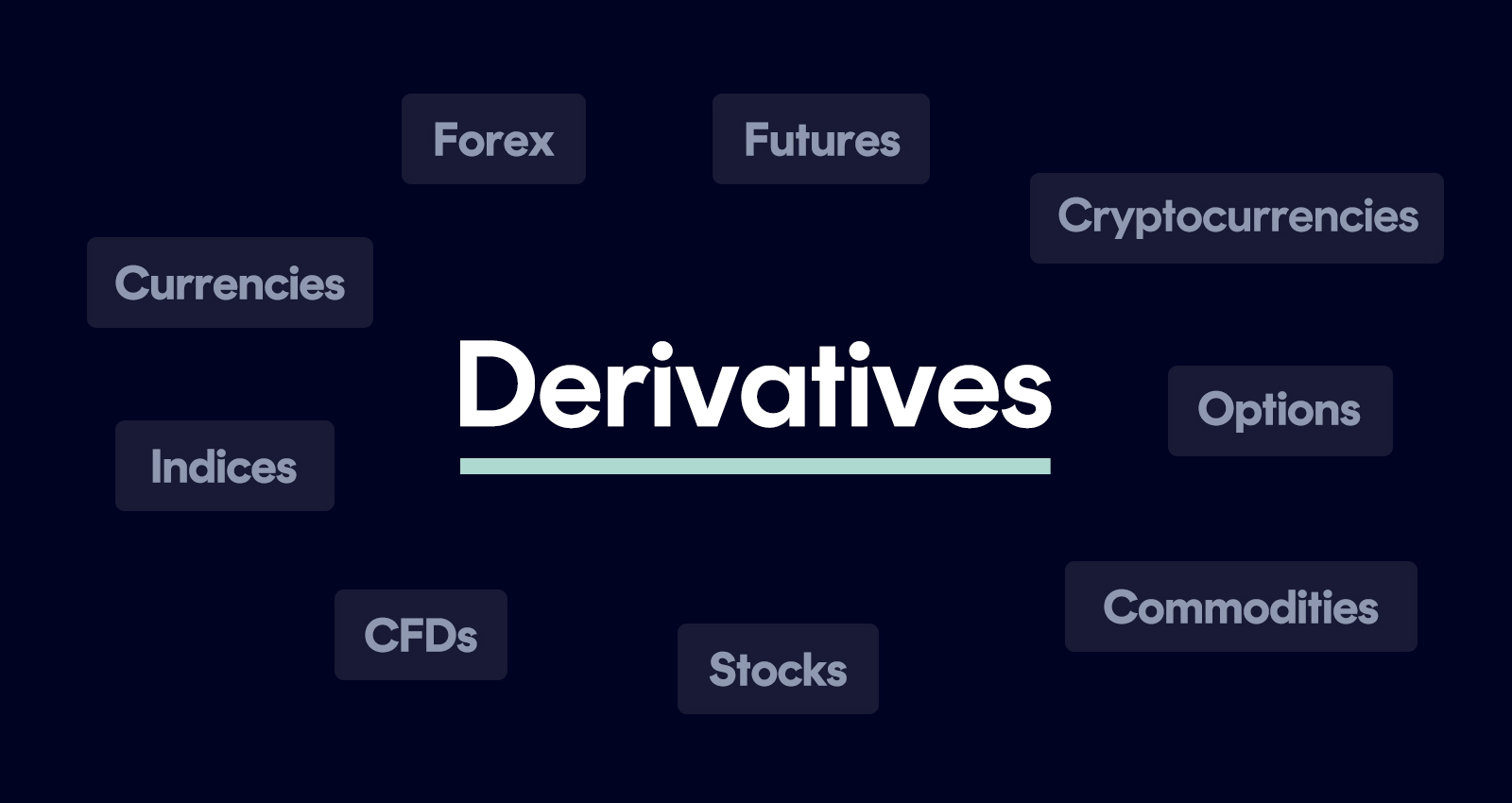
Derivatives trading: You trade financial contracts whose value is derived from a cryptocurrency’s price.
For beginners, it makes sense to understand the basics of spot trading first before moving on to more complex derivatives.
2. Spot trading: Buying and selling cryptocurrencies
In spot trading, you buy or sell a cryptocurrency directly. If you buy Bitcoin with US dollars, for example, you receive a corresponding amount of BTC in your exchange account.
Trading happens through so-called trading pairs, for example BTC/USD. This trading pair shows you how many US dollars you have to pay for one Bitcoin.
To buy or sell cryptocurrencies, you place a so-called order. With it, you specify which cryptocurrency you want to trade and in what amount.
Market orders and limit orders: What’s the difference?
On trading platforms, you have access to different order types. The two most important are market and limit orders.
| Order type | How it works | Key point |
|---|---|---|
| Market order | Buy or sell at the best available market price | Fast execution; price can differ |
| Limit order | Buy or sell at a set price or better | Price control, but no fill guarantee |
| Stop-loss | Triggers an order when a set price is reached | Can limit losses |
| Take-profit | Triggers an order when a profit target is reached | Enables a planned exit |
Market order: You want to buy Bitcoin right away. The platform fills your order against the currently available sell offers. With large orders or low liquidity, the actual purchase price can differ from the last displayed price. That’s called slippage.
Limit order: Bitcoin currently costs $60,000, but you don’t want to pay more than $58,000. So you place a buy limit order at $58,000. It will only fill at that price or better — but it might not fill at all.
What are stop-loss and take-profit?
With stop-loss and take-profit, you can decide before a trade at which prices you want to close your position again.
Suppose you buy Bitcoin at $60,000:
Stop-loss at $57,000: You want to close your position if Bitcoin falls by 5%.
Take-profit at $66,000: You want to lock in profits if Bitcoin rises by 10%.
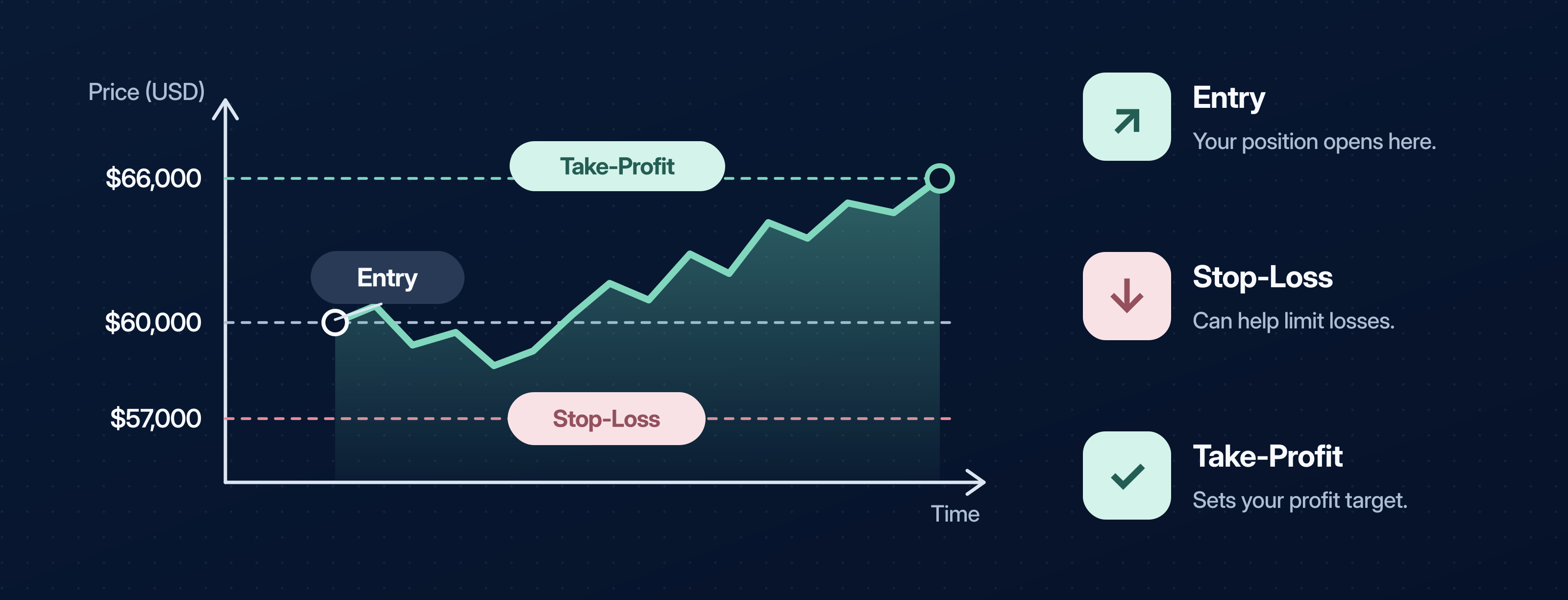
That way, you already have a clear exit plan before you enter.
Order book, spread, and trading fees
On professional trading platforms, you’ll often see an order book. It shows the open buy and sell offers from other market participants.
The highest bid price is called the bid, and the lowest ask price is the ask. The difference between the two is called the spread.
In addition, there are often trading fees:
Maker fees: When your order adds liquidity to the order book, for example through a limit order that is not filled immediately.
Taker fees: When your order takes existing liquidity, for example through a market order.
A limit order is therefore not automatically a maker order. If it fills immediately against existing offers, taker fees can apply.
Especially if you trade frequently, it’s worth comparing fees and spreads. They can eat up a large share of your profits.
3. Understanding trading charts and analyzing prices
Traders use price charts to examine price movements and find possible entry and exit points.
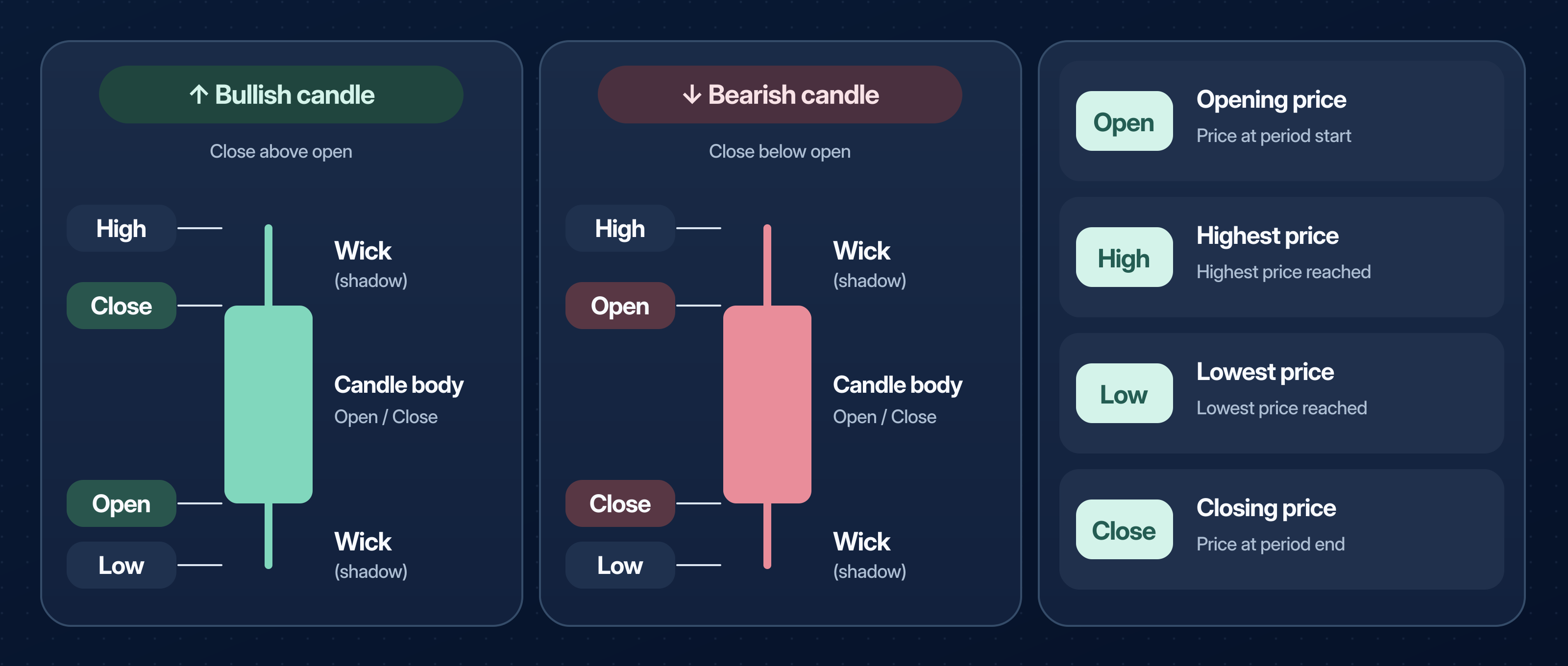
Especially common are so-called candlestick charts. Each candle shows the price movement within a specific time period, for example one hour or one day.
Four values are shown:
Open: Price at the start of the period
High: Highest price
Low: Lowest price
Close: Price at the end of the period
The candle body shows the difference between the open and close. The wicks mark the high and low.
A green candle usually means the price rose within the selected period; a red candle means it fell.
Trends, support, and resistance
In technical analysis, traders look for recurring patterns and notable price zones.
Uptrend: The price mostly forms higher highs and higher lows.
Downtrend: The price mostly forms lower highs and lower lows.
Support: A price zone where buying interest has repeatedly appeared in the past.
Resistance: A price zone where selling interest has repeatedly appeared in the past.
Traders also use technical indicators. Popular examples include moving averages, the Relative Strength Index (RSI), or the MACD.
These tools help put price moves into context. They cannot reliably predict future prices, though. Even a seemingly clear chart signal can turn out to be wrong.
Technical analysis vs. fundamental analysis
Alongside technical analysis, there is fundamental analysis. Here, traders look at things like a cryptocurrency’s technology, usage, tokenomics, and market position.
While technical analysis mainly focuses on price and volume data, fundamental analysis tries to assess the underlying value and possible influencing factors.
Both approaches can complement each other, but neither guarantees how prices will move in the future.
4. Long, short, and leverage: Understanding futures trading
In classic spot trading, you generally profit from rising prices of the cryptocurrency you bought. With certain derivatives, you can instead bet on both rising and falling prices and also use leverage.
Long and short: Betting on rising or falling prices
A long position profits from rising prices.
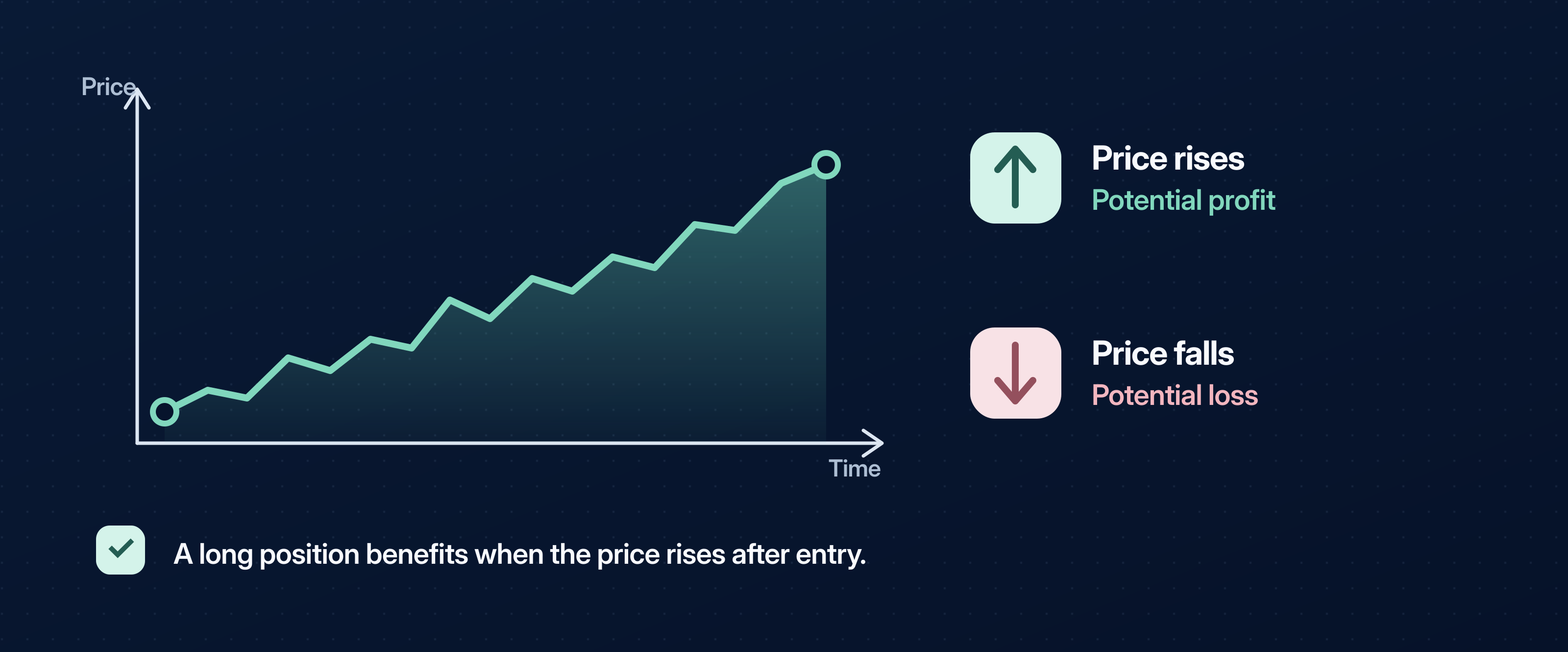
A short position profits from falling prices.
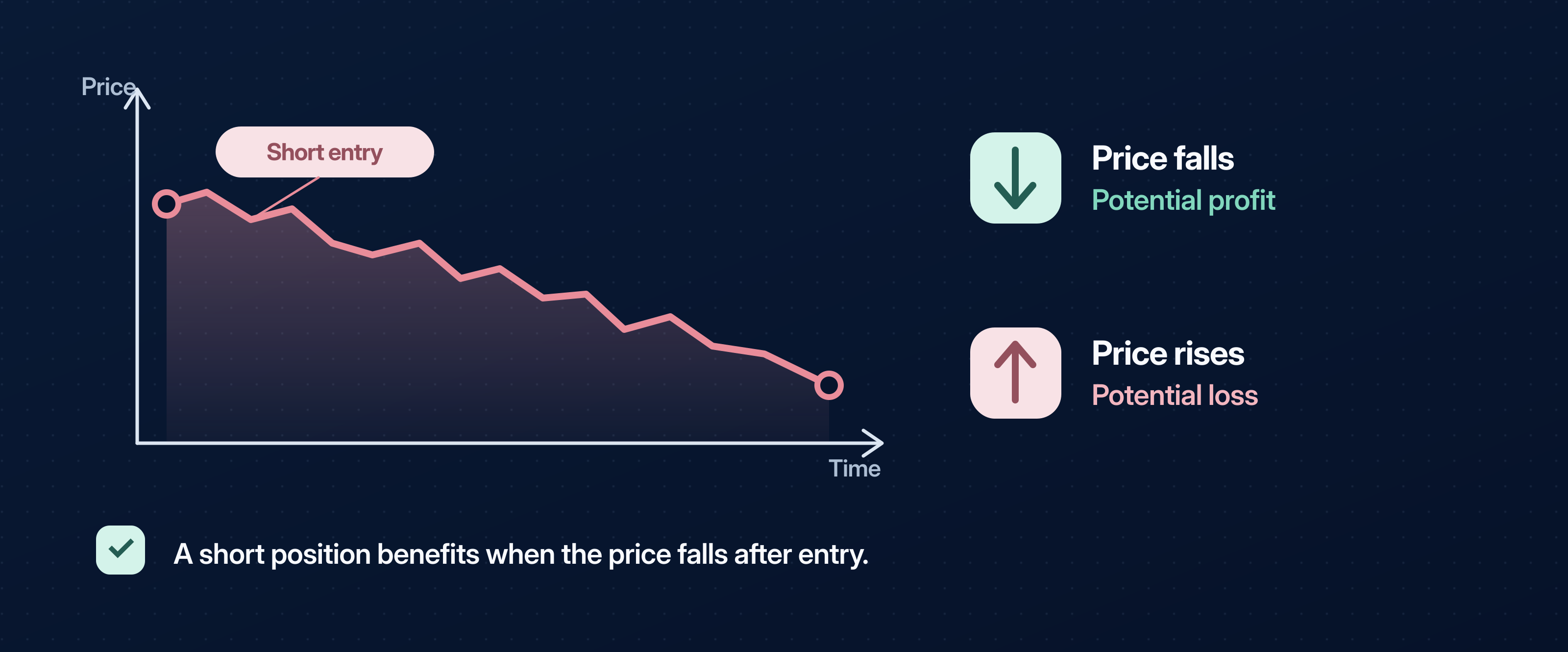
Example: You open a derivatives position worth $1,000.
| Price move | Long position | Short position |
|---|---|---|
| Bitcoin rises 5% | +$50 | −$50 |
| Bitcoin falls 5% | −$50 | +$50 |
With a short position, you can therefore also make profits when prices fall. If the price rises instead, you take a loss.
Unlike a normal spot purchase, trading derivatives does not automatically mean you own the underlying cryptocurrency.
What are futures and perpetual futures?
Futures are forward contracts whose value is derived from an underlying asset such as Bitcoin. Classic futures have a fixed expiration date. Especially common in crypto trading are so-called perpetual futures, or perps.
Perpetual futures have no fixed expiration date. You can generally keep a position open indefinitely as long as you post enough collateral and meet the trading conditions.
To keep a perpetual contract’s price from drifting too far from the underlying market price for too long, many platforms use a so-called funding mechanism.
This can result in regular payments between long and short positions. With a positive funding rate, long traders usually pay short traders; with a negative rate, it’s the other way around. How often funding is charged and how the rate is calculated depends on the specific contract.
How does leverage trading work?
With leverage trading, you can control a larger position with relatively little capital.
To do that, you post so-called margin as collateral. Suppose you open a Bitcoin position with $100 of margin:
| Leverage | Position size | Result at +5% | Result at −5% |
|---|---|---|---|
| 1x | $100 | +$5 | −$5 |
| 5x | $500 | +$25 | −$25 |
| 10x | $1,000 | +$50 | −$50 |
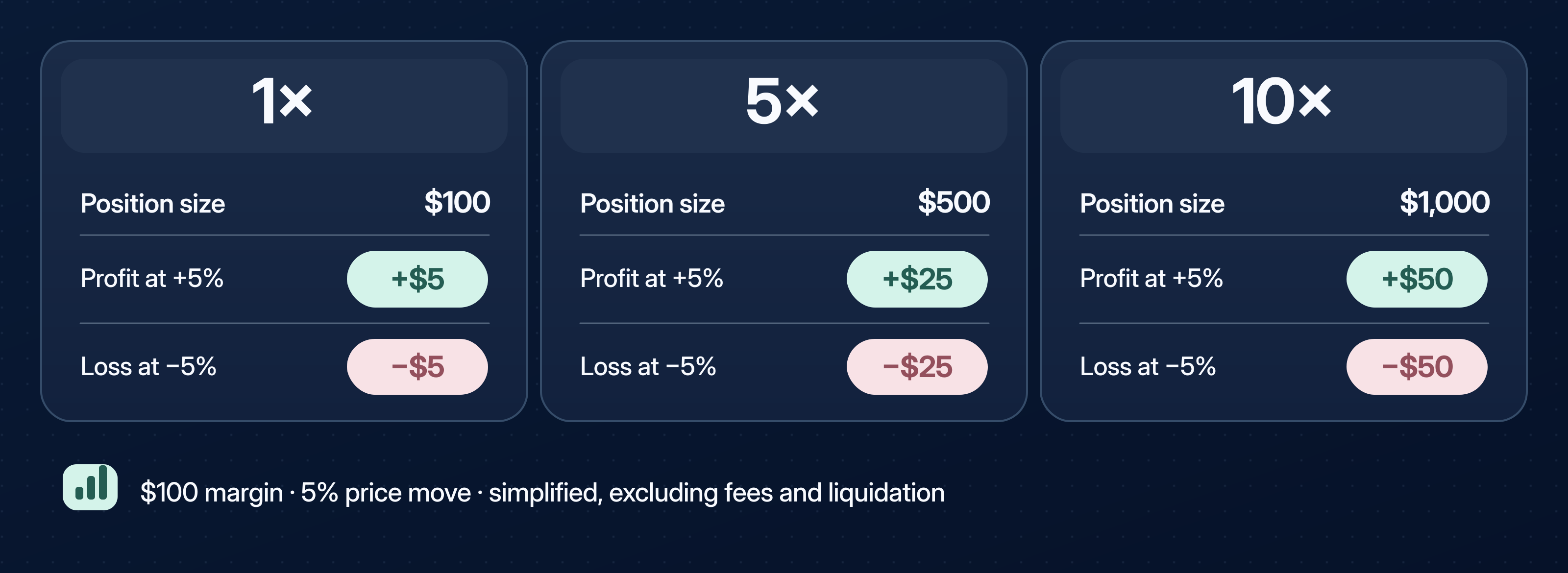
The higher the leverage, the more strongly the same price move affects the margin you posted.
With 10x leverage, a 5% move in your favor theoretically yields a 50% gain on your margin. A move against you means a corresponding 50% loss.
Leverage therefore does not increase the odds of a successful trade. It amplifies both potential gains and losses.
What does liquidation mean?
Liquidation means the trading platform forcibly closes your position because the collateral you posted is no longer sufficient.
With 20x leverage, an adverse 5% move can theoretically wipe out your entire initial margin. In practice, liquidation can happen even earlier because of maintenance margin requirements and other costs.
The actual liquidation price depends on factors such as position size, margin requirements, and the specific product. Some platforms also distinguish between two margin models:
Isolated margin: A specific amount of collateral is assigned to one position. Risk is generally limited to that amount and any collateral added later, depending on the product terms.
Cross margin: Multiple positions can draw on shared available collateral. That means a loss can also put other funds in the corresponding margin account at risk.
5. Trading strategies and risk management
A trading strategy describes the rules you use to open and close positions.
There are different approaches:
| Strategy | Typical holding period | Basic idea |
|---|---|---|
| Scalping | Seconds to minutes | Trade many small price moves |
| Day trading | Minutes to hours | Usually close positions within the same trading day |
| Swing trading | Days to weeks | Capture larger price moves |
| Trend following | Variable | Trade in the direction of an existing trend |
| Range trading | Variable | Trade moves between support and resistance |
Important to note: None of these strategies guarantees profits. Short-term approaches in particular require a lot of attention.
Copy trading, trading bots, and AI trading
Besides trading manually, there are ways to partly or fully automate trading decisions.
Copy trading: Another trader’s trades are automatically mirrored in your own account.
Trading bots: Programs open and close positions based on predefined rules or trading signals.
AI trading: Artificial intelligence is used for market analysis, signal detection, or automated trading decisions.
Caution: These methods can simplify certain workflows, but they do not guarantee profits. With copy trading, you also take on the risks of the trader you copy. Bots and AI systems can generate faulty signals or cause large losses during unexpected market moves.
The most important rules in crypto trading
Plan your exit before you enter: Decide under which conditions you want to end a trade.
Limit your position size: A single loss should not put your entire trading capital at risk.
Factor in fees: Especially with frequent trading, they can significantly reduce your returns.
Avoid excessive leverage: Even small market moves can trigger large losses or liquidations.
Avoid emotional decisions: Fear, greed, and trying to win losses back immediately can cause you to deviate from your trading plan.
Document your trades: Record entry, exit, rationale, and outcome so you can spot mistakes and patterns.
Good risk management cannot prevent losses. But it helps you plan risks more deliberately and make decisions according to fixed rules.
Ready to get started with crypto trading?
Risk disclaimer: Crypto trading is speculative and can lead to the total loss of the capital you put in. Certain derivatives can involve additional risks beyond that. The content is for information only and does not constitute investment advice or a call to trade.
Since 2017, Philipp Duringer has been deeply involved in Bitcoin, crypto assets and digital financial markets. As the founder of Coinbird, he combines years of crypto experience with more than 15 years of technical experience in IT and digital products. His goal is to make crypto easier to understand, more transparent and easier to compare.
About the author